




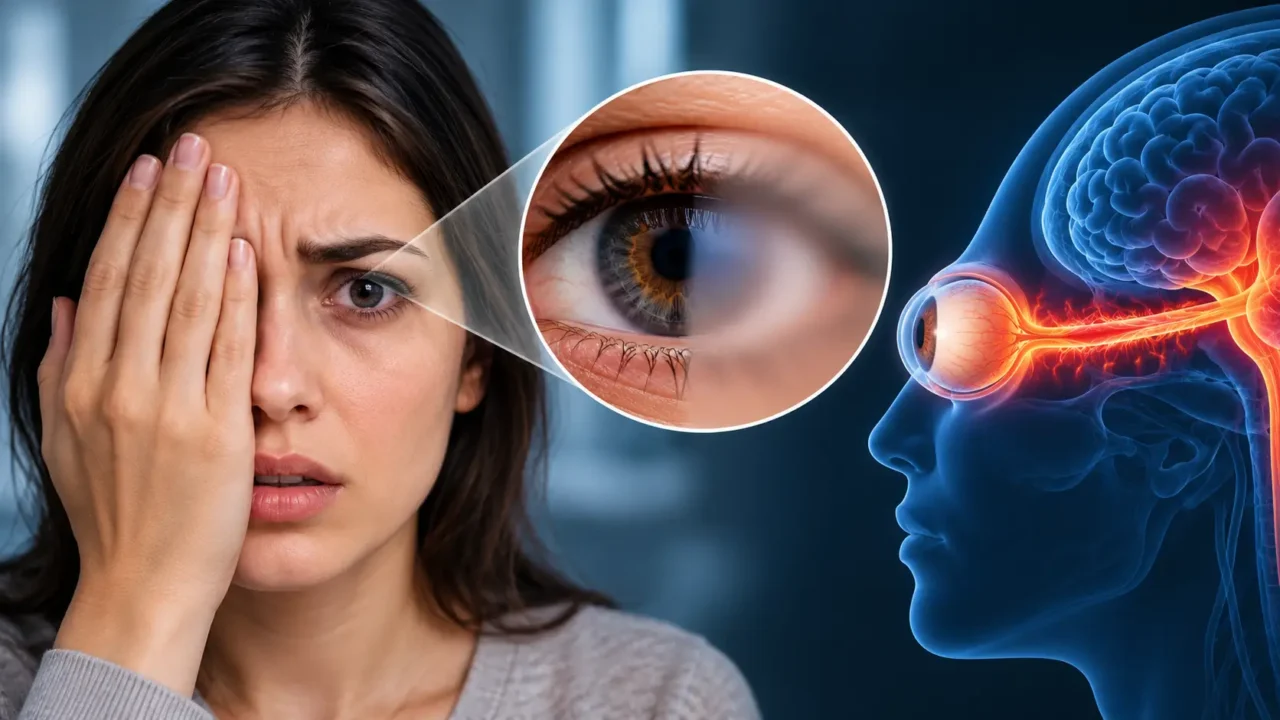
Imagine waking up one morning and noticing that the vision in one eye has become blurred. Colours appear faded, reading becomes difficult, and moving your eye causes discomfort or pain. You may initially assume it is due to eye strain, excessive screen time or a change in your spectacle prescription.
However, rapidly developing or sudden vision loss, particularly when accompanied by pain during eye movements, is often an optic neuritis symptom. Optic neuritis is an inflammatory condition affecting the optic nerve.
Optic neuritis can sometimes be the first manifestation of neurological disorders such as multiple sclerosis (MS) or neuromyelitis optica spectrum disorder (NMOSD). Recognising the symptoms and obtaining timely evaluation is important for protecting vision and identifying any underlying neurological condition.
Dr. Rahul Chawla, Senior Neurologist in South Delhi, evaluates neurological conditions affecting vision, including optic neuritis and inflammatory disorders of the central nervous system.
Table of Contents
What Is Optic Neuritis?
Optic neuritis is inflammation of the optic nerve, the nerve responsible for transmitting visual information from the eye to the brain.
When the optic nerve becomes inflamed, the transmission of visual signals is disrupted, resulting in blurred vision, reduced colour perception or partial loss of vision.
Optic neuritis commonly affects one eye, although both eyes may be involved, particularly in certain autoimmune conditions.
It is more frequently seen in young and middle-aged adults, especially between 20 and 45 years of age, but it can occur at any age.
In some patients, optic neuritis occurs as an isolated episode. In others, it may be associated with an underlying inflammatory or demyelinating neurological disorder.
Early Optic Neuritis Symptoms You Should Not Ignore
The symptoms of optic neuritis often develop over several hours to days.
Common optic neuritis symptoms include:
- Blurred Vision: Gradual or rapid reduction in vision, usually affecting one eye.
- Eye Pain with Eye Movement: Discomfort or pain behind the eye, particularly when looking in different directions.
- Reduced Colour Vision: Colours, especially red, may appear faded or less vibrant.
- Central Vision Loss: A dark or blurred spot may develop in the centre of the visual field.
- Reduced Contrast Sensitivity: Difficulty distinguishing objects from their background.
- Temporary Worsening with Heat: Some patients notice worsening of vision after exercise, hot showers or exposure to high temperatures.
The severity of symptoms varies considerably. Some patients experience mild blurring, while others develop substantial visual impairment.
Importantly, not every patient with optic neuritis experiences eye pain, and not every episode of sudden vision loss in one eye is caused by optic neuritis.
Sudden vision loss should always be treated as an urgent medical problem because other conditions, including retinal vascular occlusion and ischemic optic neuropathy, may require immediate intervention.
What Causes Optic Neuritis?
Optic neuritis develops when inflammation damages the optic nerve or its protective myelin covering.
Several conditions may cause optic nerve inflammation.
1. Multiple Sclerosis (MS)
Multiple sclerosis is an autoimmune demyelinating disorder affecting the brain, spinal cord and optic nerves.
Optic neuritis may be the first clinical manifestation of MS in some patients.
However, developing optic neuritis does not necessarily mean that a patient has multiple sclerosis.
2. Neuromyelitis Optica Spectrum Disorder (NMOSD)
NMOSD is an autoimmune neurological disorder that can cause severe inflammation of the optic nerves and spinal cord.
Optic neuritis associated with NMOSD may cause more severe visual impairment and carries a greater risk of incomplete recovery than typical MS-associated optic neuritis.
Early diagnosis is particularly important because NMOSD requires specific long-term treatment to prevent future attacks.
3. MOG Antibody-Associated Disease (MOGAD)
MOGAD is another inflammatory demyelinating condition that can affect the optic nerves, spinal cord and brain.
Patients may experience optic neuritis affecting one or both eyes, sometimes accompanied by significant optic disc swelling.
Although many patients recover vision well after treatment, relapses can occur.
4. Infections and Systemic Inflammatory Conditions
Certain infections and autoimmune diseases may cause optic nerve inflammation.
These include selected viral and bacterial infections, sarcoidosis and other systemic inflammatory disorders.
5. Idiopathic Optic Neuritis
In some cases, optic neuritis occurs without an identifiable underlying disease.
A detailed evaluation by a neurologist for optic neuritis helps determine whether the episode is isolated or associated with a broader neurological condition.
Is Optic Neuritis Related to Multiple Sclerosis?
One of the most common concerns among patients diagnosed with optic neuritis is whether they will eventually develop multiple sclerosis.
The relationship between optic neuritis and MS depends on several factors.
These include:
- Age and clinical presentation
- MRI brain findings
- Presence of demyelinating lesions
- Previous neurological symptoms
- Cerebrospinal fluid findings in selected patients
- Results of relevant antibody investigations
Patients with typical optic neuritis and MRI lesions suggestive of demyelination have a higher likelihood of developing MS than patients with a normal MRI.
However, the risk varies considerably, and MRI abnormalities do not automatically establish a diagnosis of multiple sclerosis.
Importantly, NMOSD and MOGAD must also be considered in patients with atypical optic neuritis because their treatment and long-term management differ from those of MS.
How Is Optic Neuritis Diagnosed?
Diagnosis requires a detailed assessment of visual optic neuritis symptoms, neurological findings and relevant investigations.
Dr. Rahul Chawla evaluates patients with suspected inflammatory neurological disorders to help identify the underlying cause and guide further management.
Investigations may include:
- Visual Acuity and Colour Vision Testing
These tests assess the degree of visual impairment and abnormalities in colour perception.
- Fundus Examination
An ophthalmological examination helps identify optic disc swelling and exclude retinal or other eye disorders.
The optic disc may appear normal in retrobulbar optic neuritis.
- MRI Brain and Orbits with Contrast
MRI is an important investigation for identifying optic nerve inflammation and detecting demyelinating lesions in the brain.
Dedicated orbital imaging is particularly useful when optic neuritis is suspected.
- Optical Coherence Tomography (OCT)
OCT measures retinal nerve fibre and ganglion cell layer thickness and may help assess structural changes following optic nerve inflammation.
- Visual Evoked Potentials (VEP)
VEP testing evaluates the transmission of visual signals along the optic nerve pathways.
It may provide additional information in selected patients, although it is not necessary for every case.
- Blood Investigations
Depending on the clinical presentation, investigations may include:
- Aquaporin-4 (AQP4) antibody testing
- MOG antibody testing
- Screening for systemic autoimmune diseases
- Investigations for relevant infections
- Lumbar Puncture
Cerebrospinal fluid examination may be recommended in selected cases when the diagnosis remains uncertain or when evaluating possible inflammatory or demyelinating disease.
Not every patient requires all these tests. The investigation plan depends on the symptoms, examination findings and suspected underlying condition.
Optic Neuritis Treatment
Optic neuritis treatment depends on the severity of visual impairment, clinical presentation and underlying cause.
1. Intravenous Corticosteroids
High-dose corticosteroids are commonly used in patients with significant optic neuritis.
In typical demyelinating optic neuritis, corticosteroids can accelerate visual recovery, although they do not necessarily improve the final visual outcome.
In NMOSD-associated optic neuritis, early aggressive treatment is particularly important because the risk of permanent visual disability may be higher.
2. Plasma Exchange
Plasma exchange may be considered in patients with severe optic neuritis who respond inadequately to corticosteroids, particularly when NMOSD or another severe inflammatory disorder is suspected.
3. Treatment of the Underlying Disorder
Patients diagnosed with multiple sclerosis, NMOSD or MOGAD may require disease-specific treatment to reduce the risk of future neurological attacks.
The choice of treatment differs significantly between these conditions.
4. Visual Rehabilitation and Follow-Up
Some patients may require visual rehabilitation, repeat ophthalmological examinations and monitoring of visual function.
Recovery depends on the underlying diagnosis and the severity of optic nerve injury.
Can Vision Recover After Optic Neuritis?
Many patients with typical optic neuritis experience substantial improvement in vision over several weeks.
Visual recovery often begins within the first few weeks and may continue over several months.
However, recovery is not always complete.
Some patients continue to experience:
- Reduced colour perception
- Difficulty seeing in low-contrast conditions
- Persistent visual blurring
- Reduced visual clarity during physical exertion or heat exposure
Patients with NMOSD-associated optic neuritis may have a higher risk of severe residual visual impairment.
Therefore, early diagnosis and appropriate treatment are important, particularly in patients with severe or atypical optic neuritis.
When Should You Consult a Neurologist?
Seek urgent medical evaluation if you experience any of the following optic neuritis symptoms:
- Sudden or rapidly worsening vision loss
- Blurred vision associated with eye movement pain
- Reduced colour perception in one eye
- Repeated episodes of unexplained visual impairment
- Vision loss affecting both eyes
- Visual symptoms accompanied by weakness, numbness or difficulty walking
A neurologist and ophthalmologist may work together to identify the cause of vision loss.
Patients with optic neuritis may also require evaluation for multiple sclerosis, NMOSD and MOGAD, particularly when MRI or clinical findings suggest an inflammatory neurological disorder.
Do not wait for spontaneous improvement when new vision loss occurs. Prompt emergency or urgent ophthalmological assessment is necessary to exclude other sight-threatening causes.
Neurology Consultation in South Delhi
Patients experiencing optic neuritis, unexplained visual disturbances or symptoms suggestive of demyelinating neurological disorders can seek specialist evaluation.
Dr. Rahul Chawla, Consultant Neurologist at ISIC Multispeciality Hospital, Vasant Kunj, New Delhi, provides neurological assessment and management of conditions including multiple sclerosis, NMOSD and other inflammatory neurological disorders.
Clinic Address:
ISIC Multispeciality Hospital, Indian Spinal Injuries Centre, Plot C, Vasant Kunj Rd, opposite Vasant Valley School, IAA Colony, Sector C, Vasant Kunj, New Delhi, Delhi, 110070
Phone: +91 96259 60259
Website: www.drrahulchawla.com
Online Consultation & Appointments:
Serving patients from:
Vasant Kunj, Saket, Hauz Khas, RK Puram, Green Park, Malviya Nagar, Greater Kailash, South Extension, Safdarjung Enclave, and nearby South Delhi areas.
Frequently Asked Questions
What are the first symptoms of optic neuritis?
The most common symptoms include blurred vision in one eye, pain during eye movements, reduced colour vision and difficulty seeing clearly. Symptoms often develop over hours to days.
Does optic neuritis always mean multiple sclerosis?
No. Although optic neuritis can be associated with multiple sclerosis, it may also occur independently or as part of NMOSD, MOGAD and other inflammatory conditions.
Can optic neuritis cause permanent blindness?
Yes, severe optic neuritis can occasionally cause permanent visual impairment. The risk is particularly important in NMOSD-associated optic neuritis. However, many patients with typical optic neuritis recover substantial vision.
How long does optic neuritis take to recover?
In typical optic neuritis, visual improvement often begins within a few weeks and may continue over several months. Recovery varies depending on the underlying cause and severity. Consult Dr. Rahul Chawla for personalized optic neuritis treatment in Delhi.
Is MRI necessary for optic neuritis?
MRI of the brain and orbits is commonly recommended to evaluate optic nerve inflammation and identify possible demyelinating lesions. The exact imaging protocol depends on the clinical findings.
Can optic neuritis occur in both eyes?
Yes. Although typical MS-associated optic neuritis often affects one eye, bilateral involvement can occur, particularly in MOGAD, NMOSD and certain other inflammatory conditions.
Can optic neuritis come back after treatment?
Yes. Recurrent optic neuritis may occur in conditions such as NMOSD, MOGAD and multiple sclerosis. Patients with recurrent episodes require further evaluation to identify the underlying cause and determine whether preventive treatment is necessary.
Content Details

Written By
Dr. Rahul Chawla
MBBS, MD Medicine, DM Neurology (AIIMS Delhi)