




Best Stroke Specialist in Vasant Kunj, South Delhi
What is Stroke and TIA?
A stroke, in simple terms, occurs when blood supply to the brain is stopped, blocked, or reduced, disrupting the critical supply of oxygen and other essential nutrients to the brain cells. Within minutes of such a disruption, brain cells begin to die and function is lost in the affected part of the brain. In other words, you will not be able to perform the activities controlled by the affected part of the brain such as walking, speaking, eating, remembering things, emotion control, bladder control, etc.
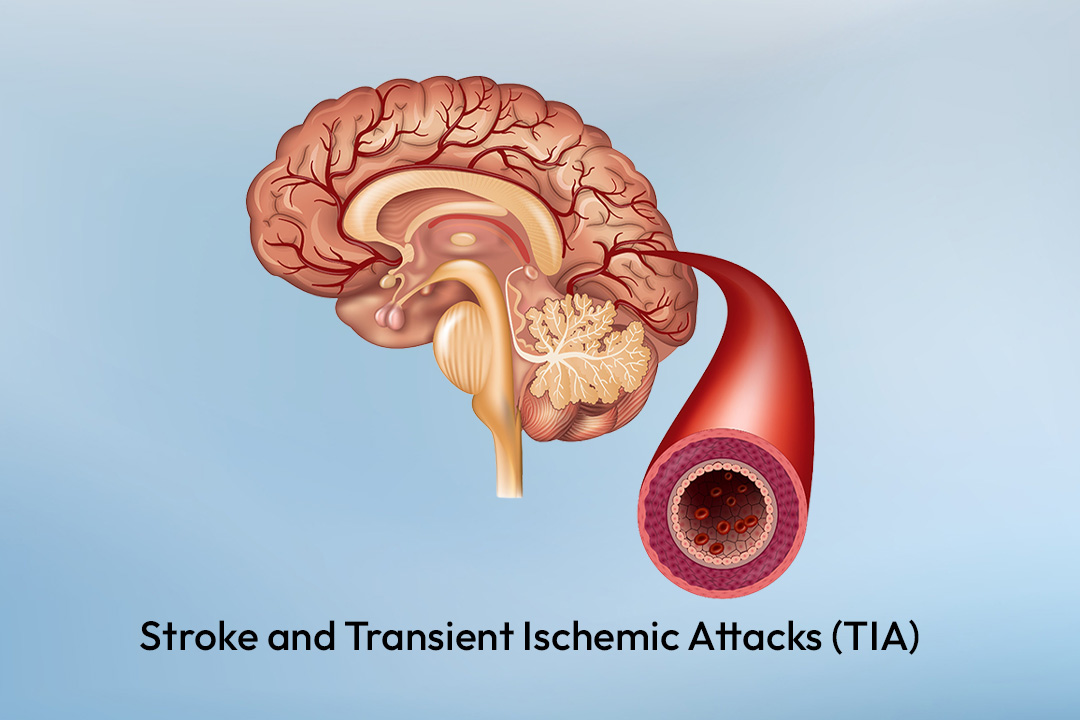
Strokes are of two kinds:
- Ischemic Stroke where a blood clot blocks blood supply to the brain.
- Haemorrhagic Stroke where a blood vessel in the brain bursts/ ruptures, causing bleeding in the brain that increases the pressure on the brain cells and damages them.
If blood supply is stopped even for a short duration, it can have catastrophic consequences. Being among the top causes for long-term disability and death, stroke is considered a serious emergency that requires immediate medical attention. You must rush to the hospital if you notice any stroke symptoms.
Transient Ischemic Attack (TIA) (also known as a mini-stroke) is a brief blockage of blood supply to the brain caused by a temporary clot and can last anywhere between a few minutes to 24 hours. Even though it is a ‘mini-stroke’, it doesn’t mean it is any less serious. The symptoms, unlike full-blown strokes, can go away quickly but it is not wise to wait to see if they subside.
A TIA can easily affect large parts of the brain or cause a full-blown stroke within as less as 48 hours. It is a crucial warning sign that should not be ignored. Ideally, the individual should be evaluated by a medical professional like Dr. Rahul Chawla, a trusted stroke specialist in South Delhi.
Common Symptoms People Ignore
Stroke and TIA are often characterized by the same symptoms. The only difference is the duration and outcome of the attack. Here are the common symptoms of Stroke and TIA:
- One-sided (or both-sided) weakness, numbness, or paralysis in the face, arm, or leg
- Sudden loss of balance and coordination, clumsiness, inability to walk or move
- Slurred speech, trouble finding words, speaking trouble or complete loss of speech
- Sudden confusion, agitation, or inability to understand what others are saying
- Sudden blurry vision, double vision, or loss of vision in one or both eyes
- Face drooping on one side or lopsided smile
The following are lesser-known symptoms that people don’t associate with strokes/ TIA and often ignore.
- Sudden, thunderclap headache with nausea or vomiting
- Sudden, unexplained personality, mood or emotional changes
- Intense dizziness, vertigo, or light-headedness
- Loss of consciousness, sudden memory loss or fainting
- Sudden difficulty swallowing
- Unusual, profound fatigue or weakness
When to Worry?
Regardless of whether you experience the symptoms for an hour or a few minutes, you must reach the hospital immediately. Reaching the hospital within the first hour can make all the difference, enabling doctors to assess and initiate emergency care within the ‘Golden Hour’. It will help prevent permanent brain damage, minimize long-term disability, and significantly increase the chances of a full recovery.
The stroke red flags can be recognised using the BE FAST acronym:
B for Balance: Ask the person to stand and check if they have trouble staying on their feet.
E for Eyes: Ask the person if they are having blurry, double, or loss of vision.
F for Face: Ask the person to smile and check if it is lopsided or drooping on one or both sides.
A for Arms: Ask the person to raise their arms and check to see if one arm is drooping downward.
S for Speech: Ask the person to speak and see if they are slurring or finding it difficult to speak.
T for Time to Call: If any of these symptoms appear (even if they go away), rush to the hospital right away.
Every Second Counts with Stroke and TIA!
If someone is experiencing any of the symptoms of a stroke or TIA, even if they disappear, reach the hospital within an hour.
Dr. Rahul Chawla, a distinguished Stroke Specialist Neurologist in Vasant Kunj, provides rapid assessment, emergency care coordination, and comprehensive stroke prevention and rehabilitation plans.
Immediate medical evaluation is the only way to prevent permanent damage.
How is Diagnosis Done?
In case of a stroke or TIA, the emergency team at the hospital will move quickly to rapidly assess your condition and initiate emergency care with a focus on brain preservation.
Clinical Examination: The doctor will conduct a thorough physical and neurological examination to check blood pressure, heart rhythm, and motor functions to pinpoint the affected area of the brain.
Medical History: The doctor will gather your complete medical history and crucial information about your symptoms.Diagnostic Tests: Depending upon the need, the doctor may order diagnostic tests such as a Brain CT, MRI of the brain or other organs, CT Angiography for blood vessel imaging, MRA for arterial blood flow, ECG, Carotid Ultrasound, Cerebral Angiogram or other tests/ investigations to understand your condition, pinpoint causes, and effectively treat you.
Treatment Approach for Stroke and TIA
The treatment for Stroke and TIA is based on three key factors – the extent of brain damage, the location of damage in the brain, and the type of stroke.
Acute Emergency Management: In the crucial first 24 hours after stroke, the focus is on using medicines or surgery to remove the blood clot, surgically drain fluids from the brain, and/or perform a procedure to stop pressure from building up in the brain.
Secondary Prevention: If you have had a stroke or TIA, you are at a risk of recurrence if risk factors and root causes aren’t identified and addressed. After emergency care, the focus is on identifying the root cause to understand why the stroke/ TIA happened. Root causes may include diabetes, hypertension, high cholesterol, atrial fibrillation, or heart disease. The doctor will suggest lifestyle changes, medications, and other therapies to build a defensive shield to prevent future occurrence.
Rehabilitation & Recovery: Recovery after a stroke may take days, months, or years and varies from person to person. Based on your condition and the level of damage, a tailored rehabilitation and recovery program is designed by the neurologist and may include physical and occupational therapy, speech therapy, psychiatric counselling, dietary modifications, and so on to ensure the best possible quality of life.
Common Myths About Stroke and TIA
| Myth | Fact |
| Stroke only affects older people. | While the risk factors increase with age, strokes and TIA can occur at any age, even in young adults and children. The alarming reality is that an increasing number of people affected by stroke and TIA are in the 18-45 age group because of risk factors like obesity and diabetes. This dangerous myth is causing younger people to ignore warning signs, overlook risk factors, and delay treatments. |
| Stroke cannot be prevented. | While all strokes may not be preventable, it is possible to prevent strokes by identifying and effectively managing risk factors such as diabetes, hypertension, high cholesterol, smoking, obesity, heart diseases, alcohol abuse, prior TIAs, etc. In addition to managing risk factors, lifestyle and dietary changes can significantly lower your stroke risk. |
| Stroke only affects the brain. | The brain controls the body; therefore, the whole body is affected even though a stroke occurs in the brain. Depending on the location of the stroke, the patient may experience speech troubles, physical challenges, cognitive effects, and emotional difficulties. This is why stroke recovery and rehabilitation require a tailored, multidisciplinary approach. |
| If stroke symptoms go away or last only a few minutes, you don’t need medical attention. | This is one of the most damaging myths about stroke and TIA. Even if stroke/ TIA symptoms last only for a few minutes, the damage could be significant. You need to seek medical attention within the first hour (to 4.5 hours) to increase your chances of full recovery and prevent long-term disability. |
| TIA is not as serious as a stroke. | TIA may be called a mini-stroke but it is red flag and a crucial warning sign of an impending stroke in the near future. A significant proportion of those experiencing a TIA end up having a full-blown stroke within a year. If you experience a TIA, you must get professional help to identify root causes and prevent future strokes. |
Every Second Counts with Stroke and TIA!
If someone is experiencing any of the symptoms of a stroke or TIA, even if they disappear, reach the hospital within an hour.
Dr. Rahul Chawla, a distinguished Stroke Specialist Neurologist in Vasant Kunj, provides rapid assessment, emergency care coordination, and comprehensive stroke prevention and rehabilitation plans.
Immediate medical evaluation is the only way to prevent permanent damage.
FAQs
Yes, you absolutely must! This is the most critical time to see a doctor. Symptoms that resolve quickly are the hallmark of a TIA (Mini-Stroke), which is often a warning sign of an impending stroke. Your risk of a massive, permanent stroke is highest in the 24 to 48 hours following a TIA. Immediate evaluation by Dr. Rahul Chawla, a trusted Neurologist in Delhi, can help identify the cause and start preventative treatment before a major event occurs.
The Golden Hour refers to the first 60 minutes after stroke symptoms begin, though the critical window for many emergency treatments (like clot-busting medications) extends up to 4.5 hours. The faster blood flow is restored, the more brain tissue can be saved. Time is Brain – every minute of delay can result in the loss of nearly 2 million neurons and increase the risk of permanent disability.
Yes, it is possible if you have what is called a ‘Silent Stroke’. Such strokes affect parts of the brain that don’t control outwards functions such as speech, movement, or vision. As a result of which you may not notice a sudden deficit or shift. However, they still damage brain tissue and increase the risk of future major strokes and vascular dementia. These are often discovered during an MRI or CT scan for another issue.
Recovery depends on the severity of the stroke, the location in the brain, and how quickly treatment was started. Thanks to neuroplasticity – the brain’s ability to reorganize itself – many patients regain significant function through a tailored, multidisciplinary rehabilitation program. Dr. Rahul Chawla, an experienced Stroke Specialist in Delhi, can help you with the same.
The stroke red flags can be recognised using the BE FAST acronym:
B for Balance: Ask the person to stand and check if they have trouble staying on their feet.
E for Eyes: Ask the person if they are having blurry, double, or loss of vision.
F for Face: Ask the person to smile and check if it is lopsided or drooping on one or both sides.
A for Arms: Ask the person to raise their arms and check to see if one arm is drooping downward.
S for Speech: Ask the person to speak and see if they are slurring or finding it difficult to speak.
T for Time to Call: If any of these symptoms appear (even if they go away), rush to the hospital right away.
Consult Dr. Rahul Chawla for Stroke Risk Assessment And Prevention in Vasant Kunj.